Colonoscopy explained: preparation, procedure and recovery
12 June 2026 · By Endoscopy.mu · Updated 17 June 2026
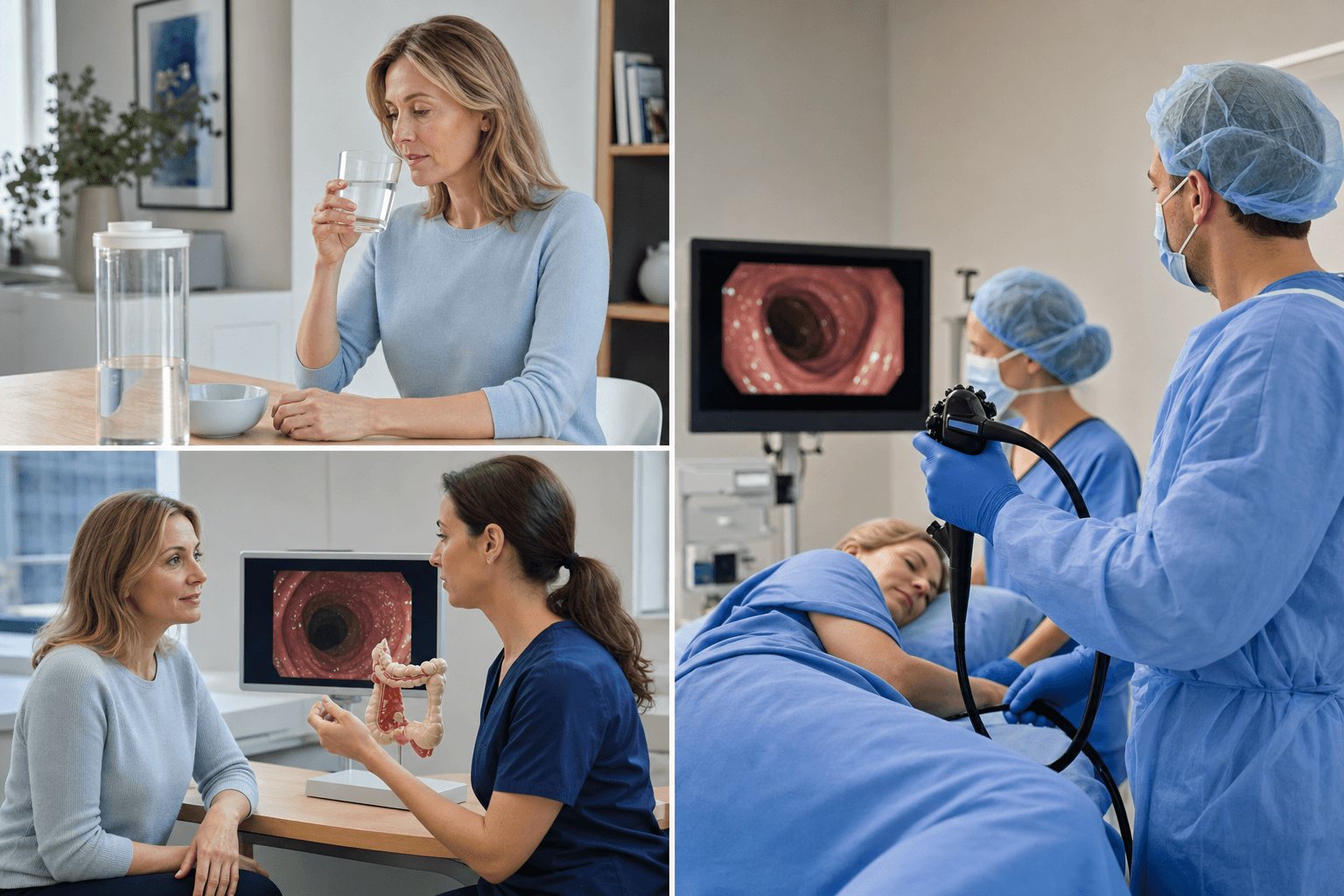
What a colonoscopy is
A colonoscopy is an examination of the large bowel, also called the colon, using a thin flexible tube with a camera on the end. It lets a doctor see the lining of the bowel clearly, take small tissue samples if needed, and remove small growths called polyps during the same procedure. It is one of the most useful tools for investigating bowel symptoms and for bowel cancer screening.
The part most people remember is the preparation, not the procedure itself. Getting the preparation right is the key to a successful examination.
Why bowel preparation matters
For the doctor to see the lining of the bowel clearly, the bowel must be as empty as possible. Any leftover material can hide important findings or mean the examination has to be repeated. This is why the preparation, often called the bowel prep, is taken so seriously.
The low residue diet
In the days before, you will usually be asked to switch to a low residue diet. This means avoiding high fibre foods such as wholegrains, nuts, seeds, raw vegetables and skins, and choosing simpler foods like white rice, white bread, plain chicken and fish. This makes the later cleansing easier.
The cleansing solution
The day before, you take a special laxative solution that clears the bowel. It comes as a drink that you take in stages. It will cause frequent loose stools, so plan to stay close to a toilet and keep the time free. Drinking plenty of clear fluids during this stage is important to stay hydrated.
A practical tip is to chill the solution and sip it steadily, and to have soft toilet tissue and a barrier cream on hand for comfort.
Fasting and fluids
You will be asked to stop solid food and switch to clear fluids for part of the preparation, then to stop drinking entirely a couple of hours before the procedure. Clear fluids include water, clear broth and apple juice without pulp. Avoid anything red or purple in colour, as it can be mistaken for blood. Follow the exact timings your clinic gives you.
During the procedure
On the day you lie on your side. Most people are offered a sedative, pain relief or both to keep them comfortable and relaxed. The endoscope is passed gently through the back passage and guided around the bowel while air or a gentle gas is used to open the view. You may feel some pressure or cramping, which usually passes quickly.
The examination itself often takes around twenty to forty minutes. If polyps are found, they can usually be removed during the same procedure, and samples are sent for testing.
Recovery
Afterwards you rest while any sedation wears off. It is normal to feel bloated or to pass wind for a while, as the air used during the examination leaves the body. This settles quickly and is a good sign.
If you had sedation, you must have someone take you home and stay with you, and you should not drive, work or sign important documents for the rest of the day. Most people are back to normal eating and activity the next day.
If a polyp was removed or a biopsy taken, the team will explain whether there are any extra precautions, such as avoiding heavy lifting for a short period.
When to seek help afterwards
Mild bloating and a small amount of spotting can be normal. Contact the clinic or seek medical help if you have heavy bleeding, severe or worsening tummy pain, a fever or you feel very unwell. The team will give you clear instructions on who to call.
In Mauritius
Colonoscopy is available in both public and private settings in Mauritius. Because the preparation takes a full day, plan ahead, keep the day before as free as possible and arrange transport home if you are having sedation.
Talk to your doctor
This article is general education and not personal medical advice. Your clinic will give you a detailed preparation sheet, and those instructions come first. If you are unsure about the diet, the cleansing solution or your usual medicines, ask your doctor or the endoscopy unit before the day.
A healthy gut is central to a longer, healthier life. Explore the wider Medtech health ecosystem.