Preparing for a gastroscopy: a step-by-step guide
11 June 2026 · By Endoscopy.mu · Updated 17 June 2026
Getting ready for a gastroscopy
A gastroscopy is an examination of your oesophagus, stomach and the first part of the small intestine using a thin flexible tube with a camera. Good preparation makes the procedure quicker, clearer and more comfortable. The single most important thing to get right is fasting, because the stomach needs to be empty for a clear view and for your safety.
The steps below describe what preparation usually involves. Your own clinic will give you specific instructions, and those instructions always take priority over general advice.
In the days before
When your appointment is booked, the team will ask about your health and your medicines. This is a good moment to mention:
- Any blood thinning medicines, such as warfarin or similar drugs
- Diabetes medicines, including insulin
- Any allergies, especially to medicines or latex
- Whether you have a heart or lung condition
Medicines you may need to adjust
Some medicines need to be paused or adjusted before a gastroscopy, while most can be continued as normal. Do not stop any medicine on your own. Ask the clinic which of your regular tablets to take and which to hold, and write the answer down so you are not relying on memory.
The day before
Eat normally during the day unless you have been told otherwise. In the evening you will usually be asked to stop eating after a certain time. Plan a light evening meal and avoid heavy, fatty food that can sit in the stomach for longer.
Fasting on the day
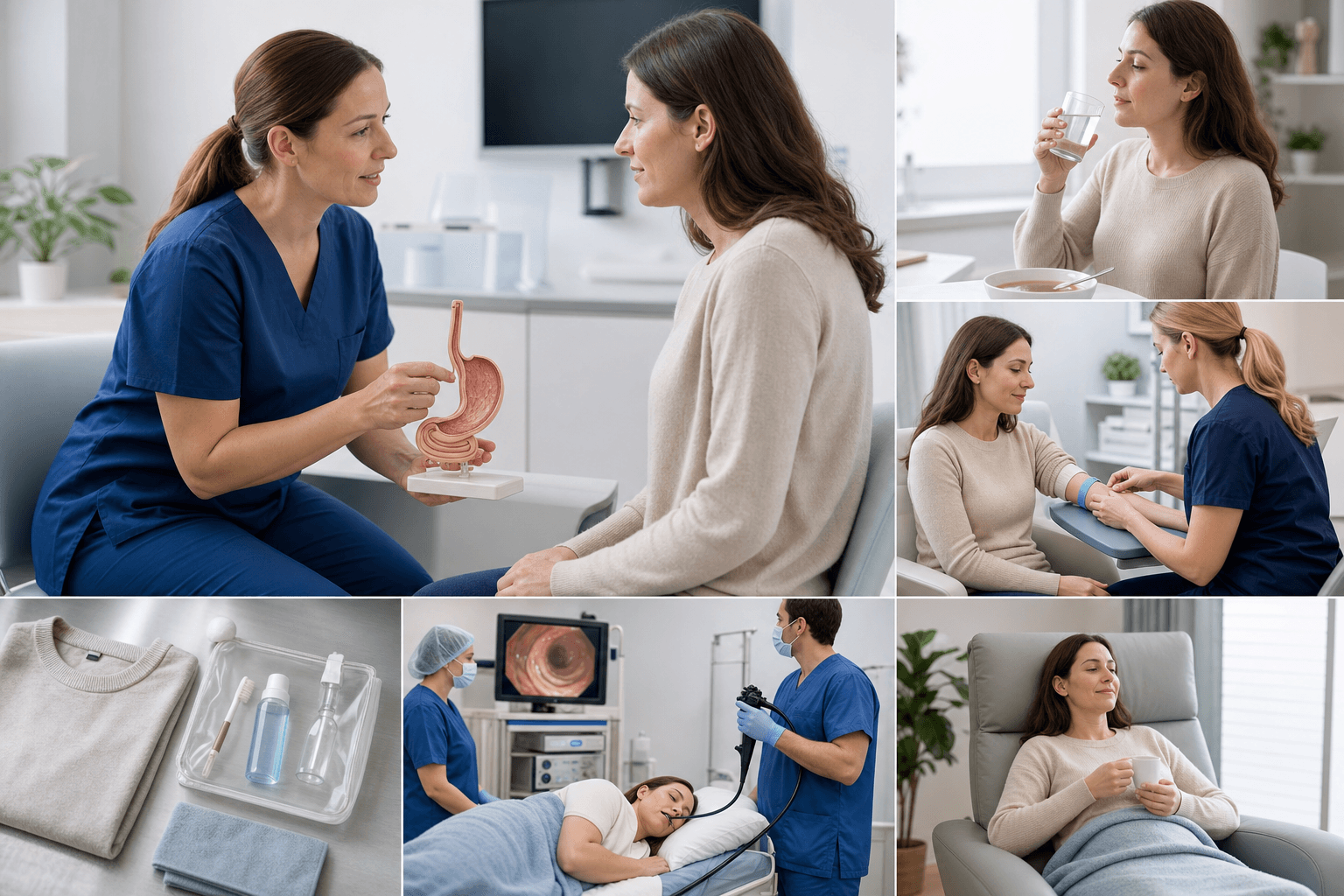
Fasting instructions vary, but a common pattern is no food for around six hours before the procedure and only small sips of clear water up to about two hours before. Clear water means plain water, not tea, coffee, milk or juice. Follow the exact times your clinic gives you.
If you accidentally eat or drink outside the allowed window, tell the team. It is far better to reschedule than to go ahead with a stomach that is not empty.
What to bring
Keep things simple on the day:
- Your appointment letter and any test results you have been asked to bring
- A list of your medicines
- Loose, comfortable clothing
- A friend or family member if you are having sedation, as you will not be able to drive afterwards
On the morning of the procedure
When you arrive, the team will check your details and explain the procedure again. You will usually be asked to sign a consent form, which is your chance to ask any last questions. If you are offered sedation, a small tube may be placed in a vein in your hand or arm.
During the gastroscopy you lie on your side. A numbing spray for the throat or a mild sedative helps you stay comfortable. The examination itself is usually short. Many people find it easier than they expected.
After a gastroscopy
If you had only a throat spray, you can usually go home soon afterwards once you can swallow safely. If you had sedation, you will rest until it wears off, and you will need someone to take you home and stay with you for the rest of the day. Avoid driving, signing important documents or drinking alcohol for the rest of the day.
A mildly sore throat or a bloated feeling from the air used during the procedure is normal and settles quickly. The team will tell you when you can eat and drink again.
In Mauritius
If you are having your gastroscopy at a clinic or hospital in Mauritius, ask in advance whether sedation is offered and arrange transport home if so. Confirm the fasting times the day before so there is no confusion on the morning.
Talk to your doctor
This guide is general education and does not replace the instructions from your own clinic. If anything about your preparation is unclear, especially around medicines and fasting, contact your doctor or the endoscopy unit before the day. They would much rather answer a question early than have your appointment delayed.
A healthy gut is central to a longer, healthier life. Explore the wider Medtech health ecosystem.