Understanding acid reflux and when to seek help
13 June 2026 · By Endoscopy.mu · Updated 17 June 2026
What acid reflux is
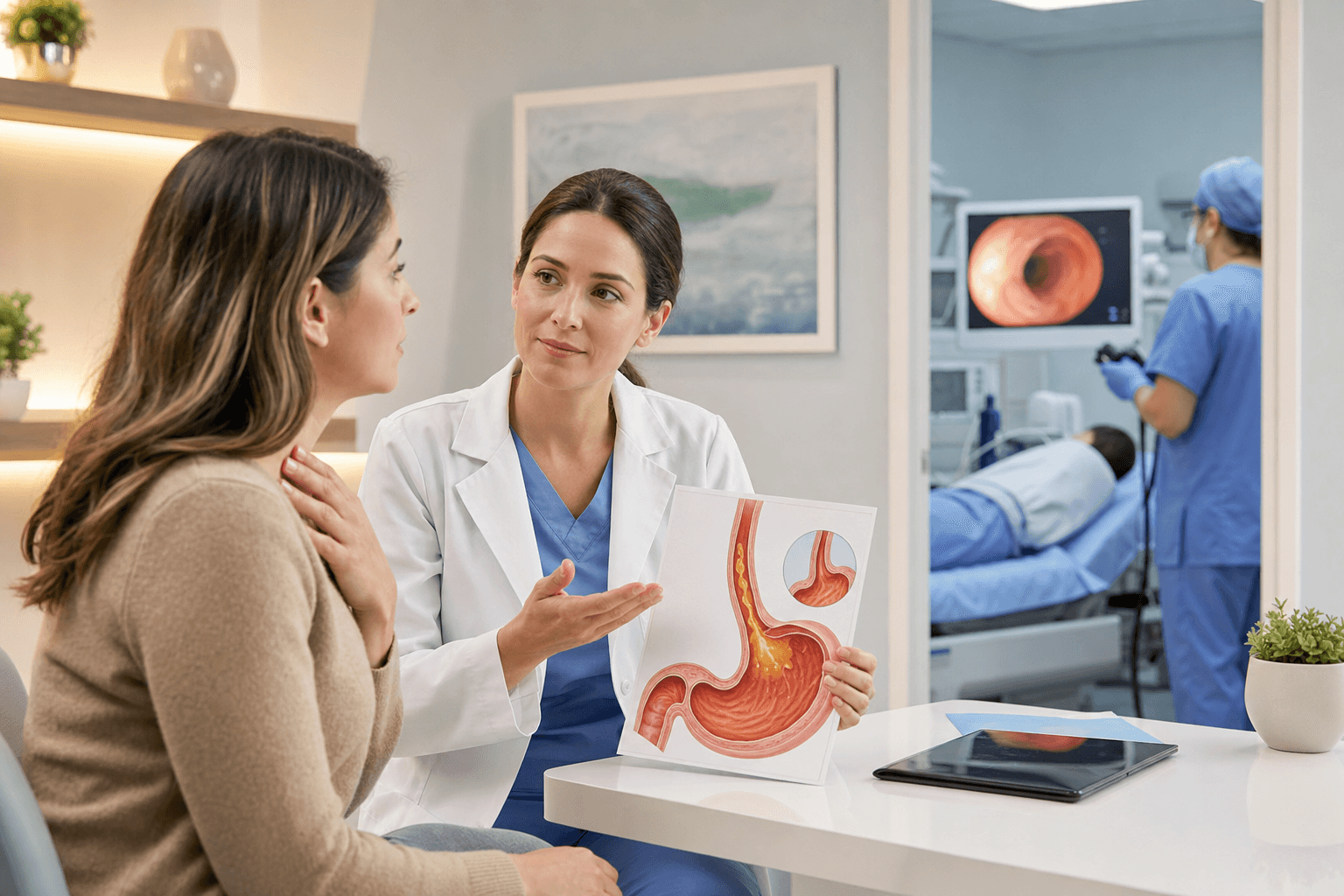
Acid reflux happens when acid from the stomach flows back up into the oesophagus, the tube that carries food from your mouth to your stomach. This can cause a burning feeling in the chest, often called heartburn, along with a sour taste, a sensation of food coming back up or a persistent cough. When reflux happens often, it is sometimes called gastro oesophageal reflux disease.
Most people experience reflux from time to time, and an occasional bout is nothing to worry about. It becomes more important when it happens regularly or affects your daily life.
Why it happens
At the join between the oesophagus and the stomach there is a muscular ring that normally keeps stomach contents where they belong. When this ring relaxes at the wrong time or is under extra pressure, acid can escape upwards. Several things make this more likely:
- Large or late meals that leave the stomach full at bedtime
- Being overweight, which increases pressure on the stomach
- Smoking and alcohol
- Certain foods and drinks, such as very fatty or spicy meals, coffee and fizzy drinks
- Lying down or bending over soon after eating
- Pregnancy, which is usually temporary
Everyday changes that often help
For many people, simple changes ease symptoms a great deal. They are worth trying steadily over a few weeks.
Adjust how and when you eat
Eat smaller meals more often rather than one or two large ones, and try to finish eating at least two to three hours before lying down. Notice which foods set off your own symptoms, since triggers vary from person to person, and ease back on those.
Adjust your habits
If you smoke, stopping helps the whole digestive system. Reducing alcohol, losing extra weight if you carry it around the middle, and raising the head of your bed slightly can all reduce night time reflux.
Over the counter relief
Antacids and similar remedies from a pharmacy can settle occasional symptoms. They are helpful for the odd flare up but are not meant to mask ongoing problems month after month without a proper review.
When to seek help
Reflux is usually harmless, but some symptoms should always be checked. See a doctor promptly if you have:
- Difficulty or pain when swallowing, or a feeling that food sticks
- Unintentional weight loss
- Repeated vomiting, or vomiting that contains blood
- Black or tarry stools
- Symptoms that keep coming back despite lifestyle changes and pharmacy remedies
- Reflux that starts for the first time later in life
These do not always mean something serious, but they are reasons to be examined rather than to wait. Your doctor may recommend a gastroscopy to look at the lining of the oesophagus and stomach and to rule out other causes.
Why persistent reflux is worth treating
Leaving frequent reflux unchecked can irritate the lining of the oesophagus over time. Getting it assessed means you can be reassured if all is well, or treated properly if it is not. Modern treatments, including medicines that reduce stomach acid, are very effective when used under guidance.
In Mauritius
Rich, spicy and late evening meals are part of life for many families in Mauritius, and they can play a part in reflux. You do not have to give up the food you love, but spacing meals earlier in the evening and keeping portions moderate often makes a real difference.
Talk to your doctor
This article is general education and not personal medical advice. If your reflux is frequent, getting worse, or you have any of the warning signs above, talk to your doctor. They can find the cause, suggest the right treatment for you and arrange tests such as an endoscopy if needed.
A healthy gut is central to a longer, healthier life. Explore the wider Medtech health ecosystem.